Ebooks
Philosophie
The Science of Knowing



227
pages
English
Ebooks
2012

227
pages
English
Ebooks
2012

Interprets Heidegger's phenomenological reading of Aristotle's philosophy.
Interprets Heidegger's phenomenological reading of Aristotle's philosophy.
Walter A. Brogan's long-awaited book exploring Heidegger's phenomenological reading of Aristotle's philosophy places particular emphasis on the Physics, Metaphysics, Ethics, and Rhetoric. Controversial and challenging, Heidegger and Aristotle claims that it is Heidegger's sustained thematic focus and insight that governs his overall reading of Aristotle, namely, that Aristotle, while attempting to remain faithful to the Parmenidean dictum regarding the oneness and unity of being, nevertheless thinks of being as twofold. Brogan offers a careful and detailed analysis of several of the most important of Heidegger's treatises on Aristotle, including his assertion that Aristotle's twofoldness of being has been ignored or misread in the traditional substance-oriented readings of Aristotle. This groundbreaking study contributes immensely to the scholarship of a growing community of ancient Greek scholars engaged in phenomenological approaches to the reading and understanding of Aristotle.
Acknowledgments
Preface
1. Martin Heidegger's Relationship to Aristotle
Heidegger's Phenomenological Reading of Aristotle
What It Means to Read Aristotle as a Phenomenologist
The Lost Manuscript: An Introduction to Heidegger's Interpretation of Aristotle
2. The Doubling of Phusis: Aristotle's View of Nature
The Meaning of Phusis
Heidegger's Ontological Interpretation of Movement in Aristotle's Philosophy
The Phenomenology of Seeing and the Recognition of Movement as the Being of Beings
The Meaning of Cause in Natural Beings: Heidegger's Rejection of Agent Causality
Ontological Movement and the Constancy of Beings
Phusis as the Granting of Place: Change and the Place of Beings
The Complex Relationship of Phusis and Techné
The Horizon for Understanding Phusis: The Meaning of Ousia
3. The Destructuring of the Tradition
Aristotle's Confrontation with Antiphon
Elemental Being (Stoicheia): Aristotle's Conception of Ontological Difference
The Meaning of Eternal (Aidion) and Its Relation to Limit (Peras)
The Necessity Belonging to Beings (Anangké) and the Possibility of Violence
The Law of Non-Contradiction
The Difference Between Being and Beings
The Method of Aristotle's Thought
The Path of Aristotle's Thought: The Twofoldness of Phusis
Aristotle's Hylomorphic Theory
The Way of Logos in the Discovery of Phusis
Genesis and Sterésis: The Negation at the Heart of Being
4. The Force of Being
Aristotle's Resolution of the Aporia of Early Greek Philosophy
The Rejection of the Categorial Sense of Being as the Framework for Understanding of Being as Force
The Non-Categorial Meaning of Logos in Connection with Being as Dunamis: Force in Relationship to Production
Aristotle's Confrontation with the Megarians: The Way of Being-Present of Force
The Connection Between Force and Perception: The Capability of Disclosing Beings as Such
5. Heidegger and Aristotle: An Ontology of Human Dasein
Dasein and the Question of Practical Life
Sein und Zeit and the Ethics of Aristotle
Plato's Dialectical Philosophy and Aristotle's Recovery of Nous: The Problem of Rhetoric and the Limits of Logos
The Ontological Status of Dialectic
Plato's Negative Account of Rhetoric in the Gorgias
Plato's Positive Account of Rhetoric in the Phaedrus
The Sophist Course: Aristotle's Recovery of Truth after Plato
The 1925-1926 Logik Course: Aristotle's Twofold Sense of Truth
Conclusion
Notes
Bibliography
Index
01 février 2012
9780791483015
English
1 Mo
Ebooks
Philosophie
The Science of Knowing
Ebooks
Philosophie
Platonic Legacies
Ebooks
Philosophie
Vision's Invisibles
Ebooks
Philosophie
Feminism, Foucault, and Embodied Subjectivity
Ebooks
Philosophie
Hans-Georg Gadamer on Education, Poetry, and History
Ebooks
Philosophie
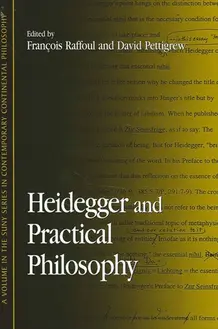
Heidegger and Practical Philosophy
Ebooks
Philosophie
The Vegetative Soul
Ebooks
Philosophie
Heidegger and Aristotle
Ebooks
Philosophie
Clara
Ebooks
Philosophie
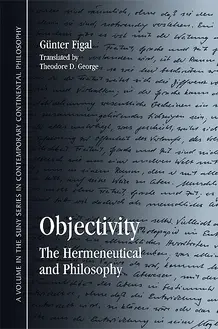
Objectivity
Ebooks
Philosophie
Ellipsis
Ebooks
Philosophie
Supplements
Ebooks
Philosophie
Labyrinths of Exemplarity
Ebooks
Philosophie
Logic and Existence
Ebooks
Philosophie
Nietzsche and Embodiment